Safe to use
Safe to use until the next examination date shown on the report, with normal pre-use checks.
LOLER 1998 · Thorough Examination · North Wales
Six-monthly LOLER inspections for tree surgeons, arborists and grounds teams. Every item examined by hand against the manufacturer's instructions and its EN standard, with a clear written report and an equipment register you can hand straight to a client or the HSE.

Every item gets one of three results
Each item on your register is graded so your team knows exactly what can go up a tree tomorrow and what can't.
Safe to use until the next examination date shown on the report, with normal pre-use checks.
Safe today, but has a defect that could become a danger. The report gives the date by which it must be put right, and it must not be used after that date.
LOLER Reg. 10(3) · Sch. 1 para 8A danger to persons. The item is tagged DO NOT USE and, with your consent, destroyed, quarantined, or returned marked out of service.
LOLER Reg. 10Recent work
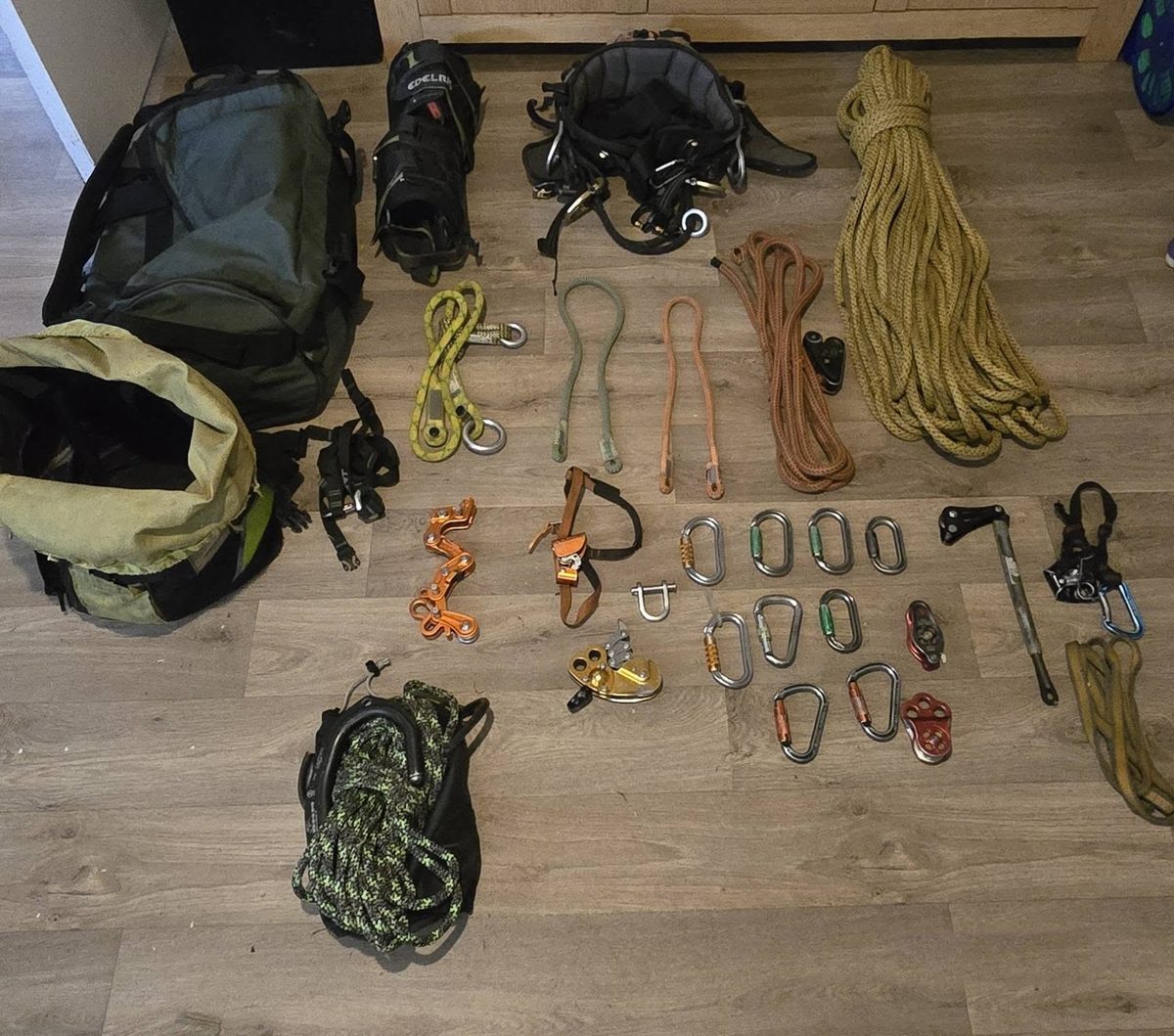
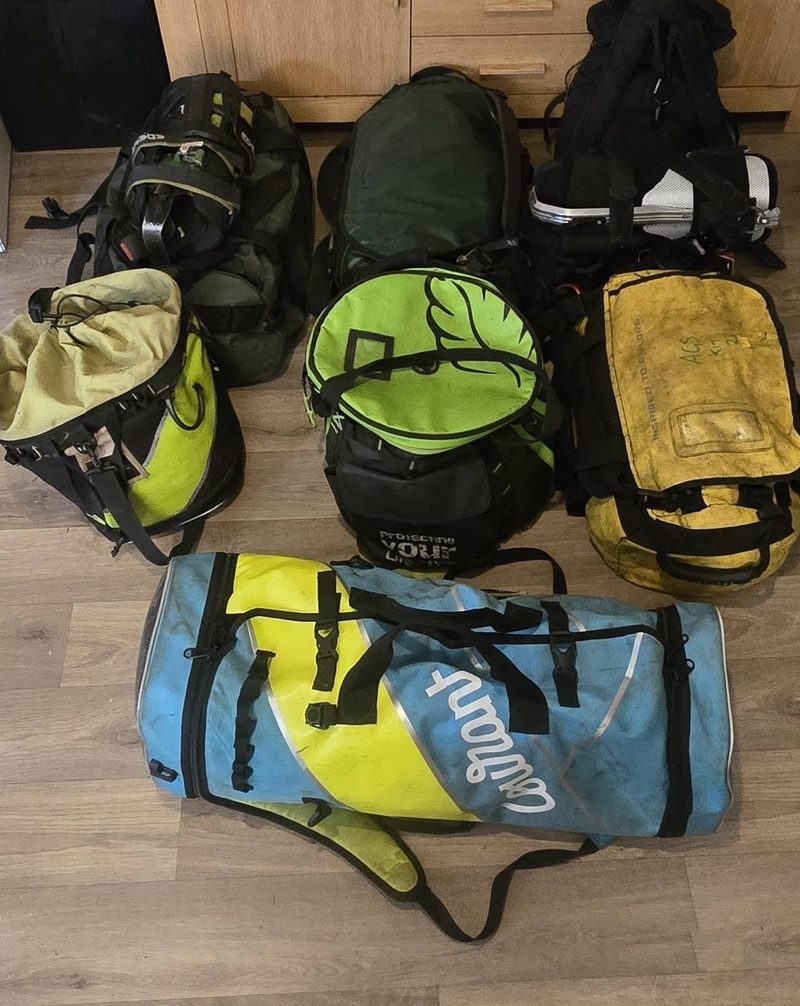
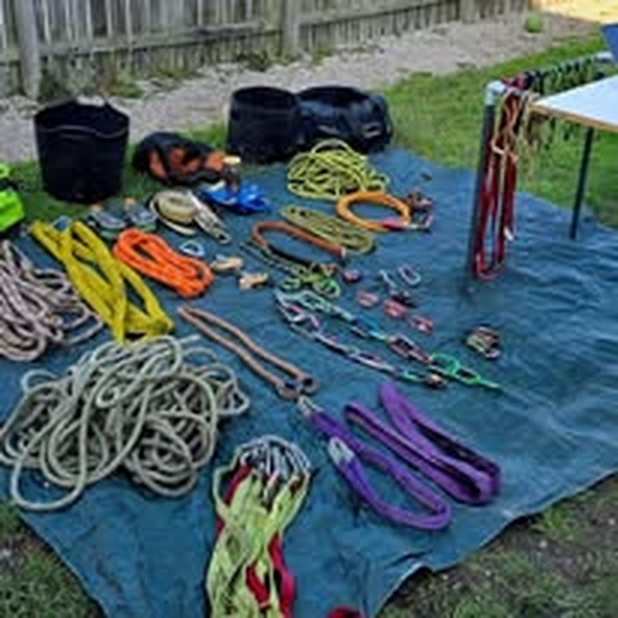
Every bag is emptied and every item laid out, logged on the register and examined one at a time. Ropes, harnesses, lanyards, karabiners, pulleys, rope wrenches, slings and rigging hardware.
From recent inspections
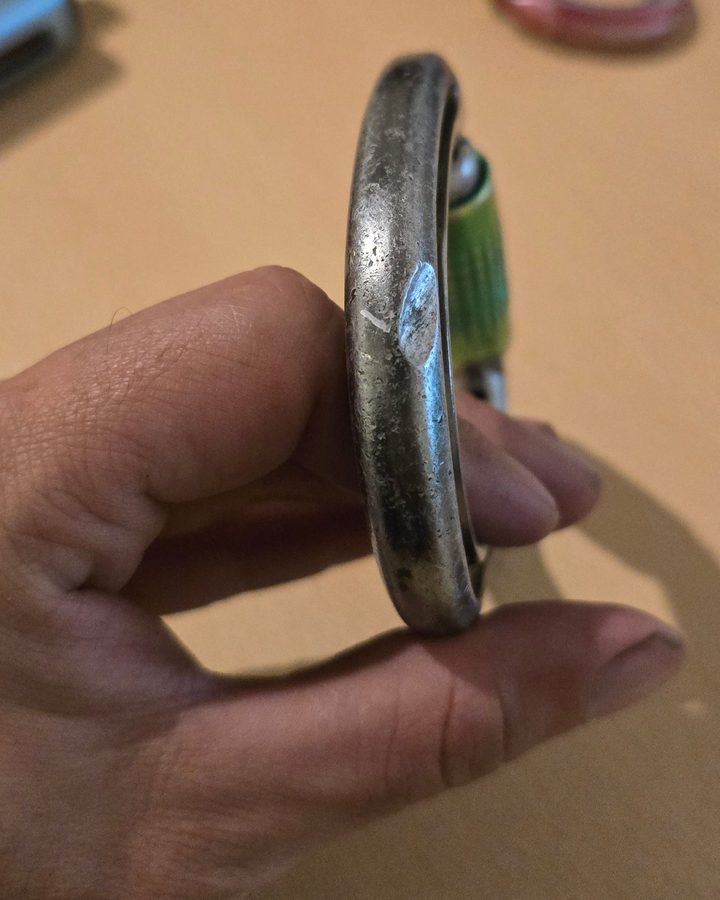
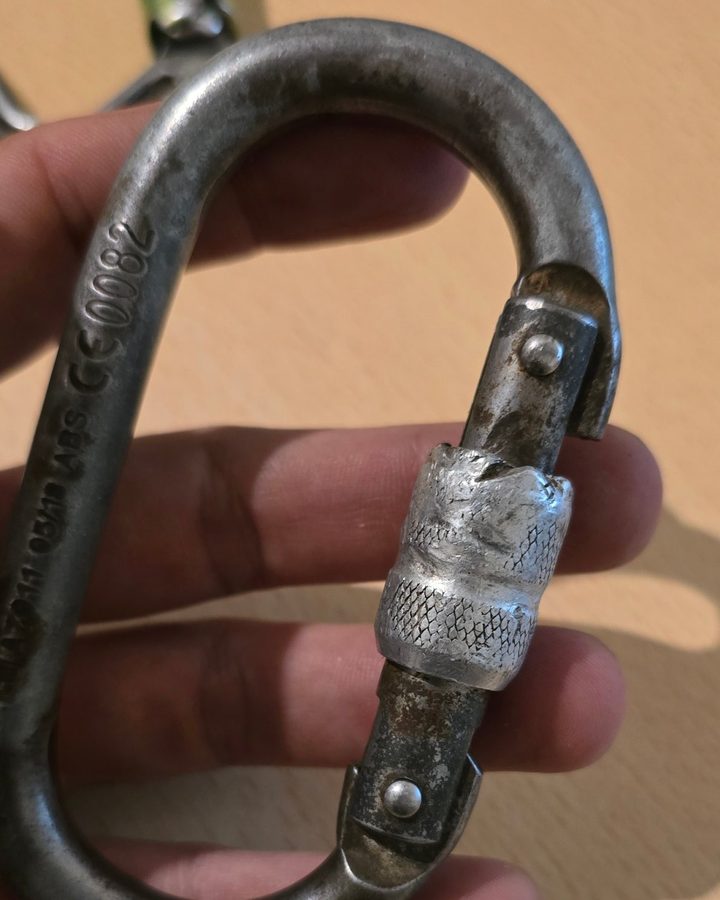
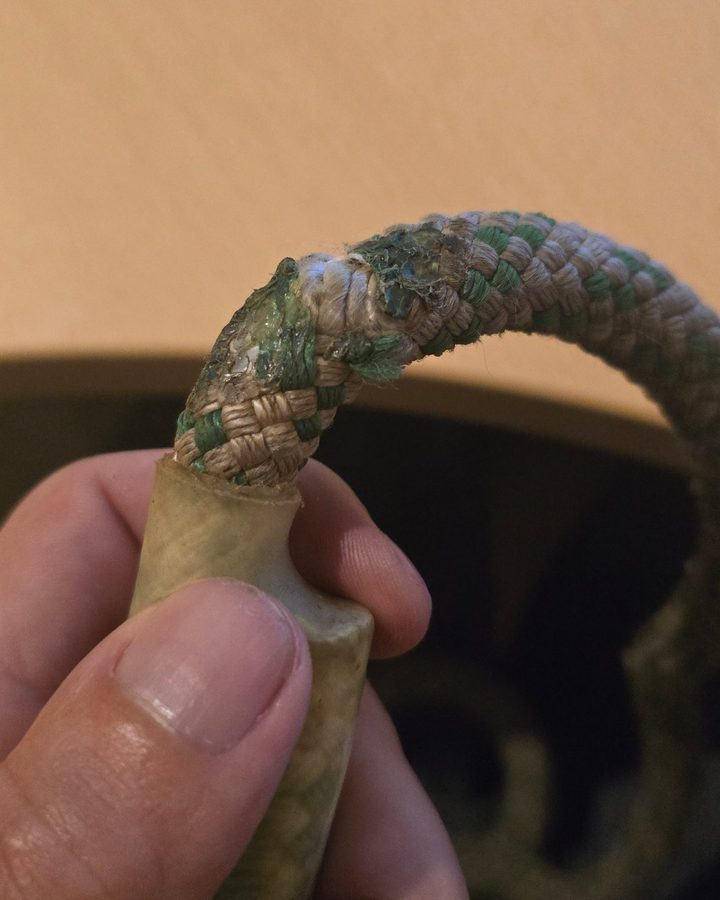
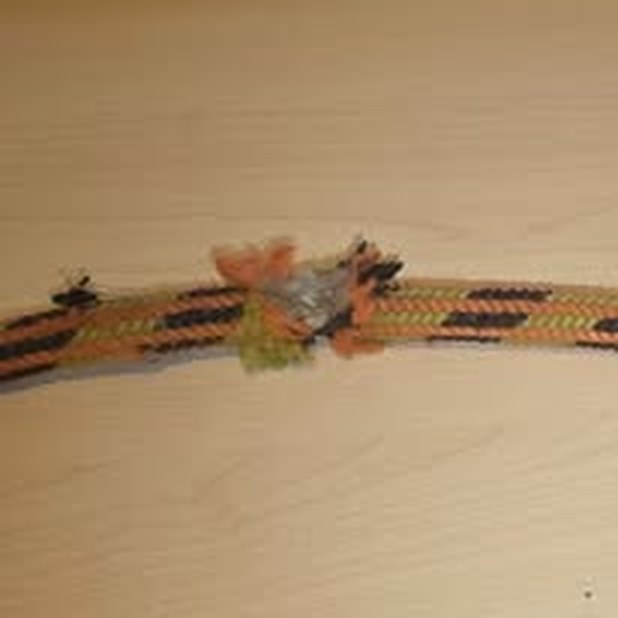
Real items that failed a thorough examination. Damage like this is easy to miss in a quick pre-use check, and any one of them could have failed under load.
 FAIL
FAILA deep gouge in the spine, with pitting along the body. Material has been lost from the main load-bearing section, so the rated strength can no longer be relied on.
 FAIL
FAILThe screwgate sleeve is crushed and torn and the gate is corroded. The sleeve can't be trusted to lock fully, so the gate could open under load.
 FAIL
FAILFriction heat has glazed and melted the sheath close to the termination, and the cover is torn through. Heat damage weakens the fibres beneath, so the rope is retired.
 FAIL
FAILThe sheath has been cut right through and the core is exposed and damaged. Once the core is showing, the rope can't be repaired and is retired straight away.
 FAIL
FAILBent out of shape through misuse, most likely cross-loading or being loaded over an edge. Once a karabiner is distorted its strength can't be trusted and the gate may not close and lock properly, so it's withdrawn for good.
 FAIL
FAILThe edge of the webbing is cut and badly frayed along its length. Edge damage concentrates the load on fewer fibres, so the strap can't be relied on to hold its rating.
What we examine
Items without legible markings, traceable identification or user information may be withdrawn from service, so bring the manufacturer's instructions where you have them.
Must carry the CE or UKCA mark and be certified to the relevant EN standard.
Examined against the manufacturer's rating and instructions, in the configuration you use it.
LOLER Regulation 9
Climbing equipment (lifting persons) and rigging accessories such as slings, blocks and rings.
Reg. 9(3)(a)(i)New or second-hand kit going into service for the first time.
Reg. 9(1)Following a shock load, a fall, damage, or long storage. Exceptional circumstances that could affect safety.
Reg. 9(3)(a)(iv)Where an examination scheme drawn up by a competent person sets the interval instead.
Reg. 9(3)(a)(iii)Ropes, slings and other textiles have a maximum service life set by the manufacturer, usually counted from first use. As a general guide, climbing ropes are retired after no more than five years of average use. Lightly used, well-stored kit can sometimes go longer, but only when a thorough examination confirms it and the manufacturer's maximum isn't exceeded.
How it works
Call or send an enquiry with roughly how many items you have. Examinations are carried out in Trefnant, Denbighshire.
Bring every item on your register, with your last report and any manufacturer's instructions. Items not presented are recorded as such.
Visual and tactile examination of every item, plus a function test of gates, locking mechanisms, cams and adjusters.
You receive a signed Report of Thorough Examination. Failed items are tagged DO NOT USE so they can't drift back into the kit bag.
What you get
Written to LOLER Schedule 1 and HSE guidance L113, so it holds up for main contractors, councils, insurers and the HSE.

| No. | Item | Std | Result |
|---|---|---|---|
| 01 | Climbing rope 11.7mm × 45m | EN 1891 | PASS |
| 02 | Sit harness | EN 813 | PASS |
| 03 | Steel triple-lock karabiner | EN 362 | PASS |
| 04 | Adjustable flipline | EN 354 | MONITOR |
| 05 | Rigging block | WLL | PASS |
| 06 | Round sling 1.5m | EN 566 | FAIL |
Retain until the next report is made or for two years, whichever is later · LOLER Reg. 11(2)(a)(iv)
Example register extract. Items shown are illustrative.
Competent person
Thomas (Tom) Kenyon
NPTC Level 3 Certificate of Competence in the Thorough Examination of Arboricultural Equipment
CERTIFICATE No. 1123290
Your examiner
Tom has worked in arboriculture for the past 20 years and has a deep knowledge of the equipment used across the industry. He knows how a flipline wears on bark, how a rigging block behaves under load, and what a shock-loaded sling looks like. Every examination is carried out impartially and independently, free from commercial or outside influence.
Between examinations
A thorough examination doesn't replace day-to-day checks. These are the owner's responsibilities under LOLER.
Check every item before every use, following the manufacturer's instructions. Arrange interim inspections where your risk assessment calls for them.
Reg. 9(3)(b)Don't use anything marked FAIL until it's repaired and re-examined. Don't use anything marked MONITOR after the date on the report.
Reg. 10(3)Keep each report until the next one is made, or for two years, whichever is later, and book the next examination before the due date.
Reg. 11Questions
Yes. Under the Lifting Operations and Lifting Equipment Regulations 1998, equipment used for lifting people, and lifting accessories, must be thoroughly examined by a competent person at least every six months, unless an examination scheme applies. Climbing and rigging kit falls under this.
If the kit is used at work, it needs examining, whether it belongs to a company or to the individual climber. Main contractors and councils will often ask to see a current report before you start on site.
Every item on your register, your previous report if you have one, and the manufacturer's instructions where available. Items without legible markings or traceable identification may be withdrawn from service.
The examination is visual and tactile, with a function test of moving parts, gates, locking mechanisms, cams and adjusters. No proof load test is carried out unless it is stated against an item in the report.
Failed items are tagged DO NOT USE. With your consent they are destroyed, quarantined pending a decision, or returned to you marked out of service. Where a defect is a risk of serious injury, LOLER requires the enforcing authority to be sent a copy of the report.
Until the next report is made, or for two years, whichever is later (LOLER Regulation 11).
Book an inspection